Dial-test any message before it airs.
Play a spot for a simulated electorate. See which voters you win, which you lose, and the exact second it happens.
Tariff response
0:19 spot
55
50
42
“Steady. But what does it cost me at the store?”
A real spot, scored by a simulated electorate as it plays.
The dial test, without renting a room of dials
Four simulated voter segments watch the clip with you. The lines move as they react, and every dip gets a reason attached, so you know which sentence to cut before the spot airs.
PM statement on US tariffs
Pre-recorded response · cable news pull
31% of electorate
55
24% of electorate
50
27% of electorate
42
18% of electorate
38
Meet the voter, then zoom out
Every dot is a simulated voter with a history, a top issue, and a reason for how they reacted. Read one person in their own words, then see how the same message breaks across the whole electorate.
Priya Sharma
Persuadable41 · Brampton, ON · suburban homeowner
“He sounded steady, I will give him that. But the next sentence needs to be about what this does to my grocery bill.”
What moves them
Costs made concrete. Name what retaliation does at the checkout.
Simulated electorate of 240 voter personas reacting to the tariff response statement.
Same policy, two framings, one clear call
The tool grades more than a single message. Run two framings head to head and see which voters each one wins, before the buy is committed.
Protecting your family’s healthcare
"No matter who you are, when someone you love gets sick, your coverage should be there. We will protect it."
Safety frame, second person, kitchen-table register
Stopping insurance company greed
"Insurance executives made nine billion dollars last year denying claims. We are going to stop them."
Villain frame, named enemy, fight register
Base
already with you
Swing
decides the district
Opposition leaners
reachable on this issue
Low engagement
hardest to reach
Framing B fires the base and raises money. Framing A wins the persuadables and keeps opposition leaners in reach. If the district is close, A is the ad.
Persuasion delta
Out of 100 swing-adjacent voters, framing A moves 14 from tuned out to persuadable. Framing B moves 3, and hardens 9 opponents.
Your next spot deserves a dial test.
Score the message, the framing, and the fallout in minutes.
The crosstab, without the field time
The same table your pollster hands you after three weeks in the field, generated from a simulated electorate while the meeting is still going.
| Message resonance | AFraming A | BFraming B | Edge |
|---|---|---|---|
| All voters | 62 | 61 | A +1 |
| By age | |||
| 18 to 34 | 51 | 66 | B +15 |
| 35 to 54 | 67 | 60 | A +7 |
| 55 and over | 70 | 55 | A +15 |
| By geography | |||
| Urban | 60 | 68 | B +8 |
| Suburban | 72 | 57 | A +15 |
| Rural | 55 | 58 | B +3 |
| By vote history | |||
| Base | 71 | 88 | B +17 |
| Swing | 78 | 64 | A +14 |
| Opposition leaners | 52 | 31 | A +21 |
Simulated electorate, n=240 personas weighted to the district.
Generated in 94 seconds
A field poll with these crosstabs takes three weeks and six figures. Run this one every time the script changes.
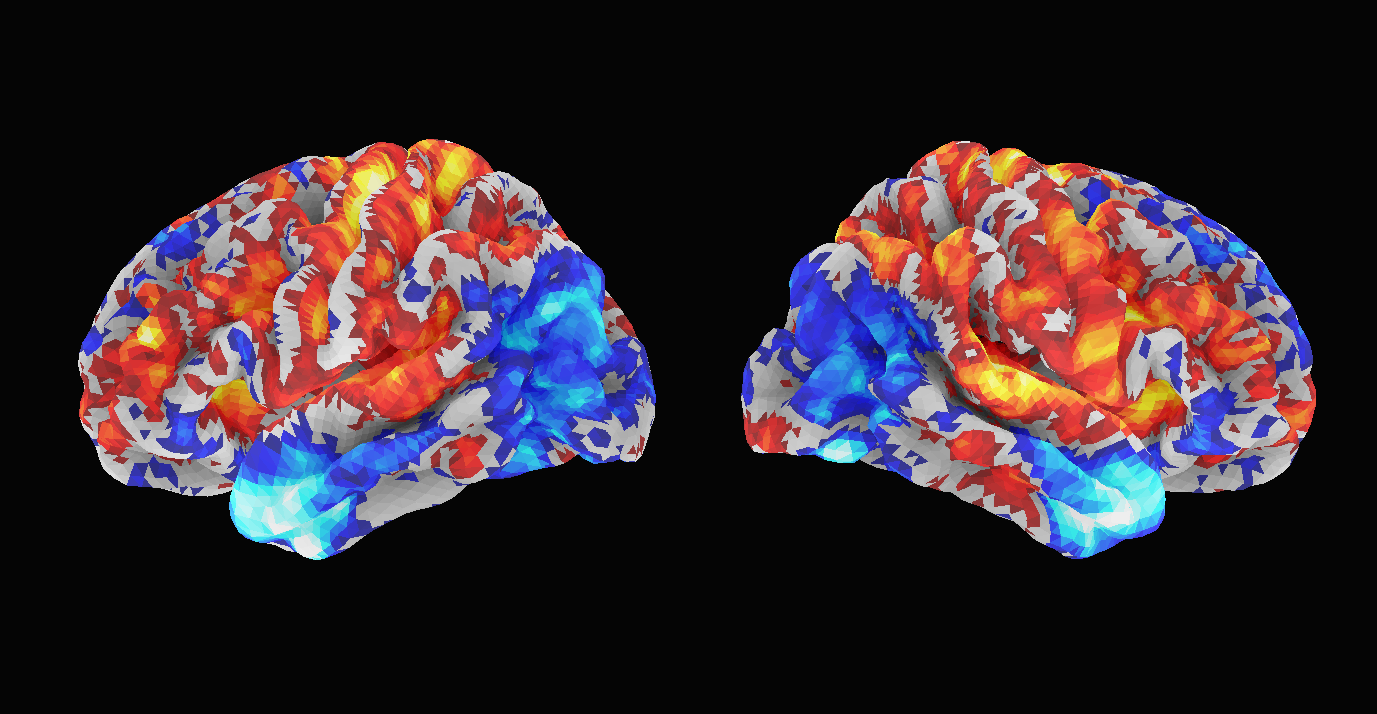
Why the numbers hold up
Under the simulation is a brain-encoding model trained on real neural recordings of people watching real content. It predicts attention and emotional response at the moment level, and the voter personas are layered on top. The dial lines, the dots, and the crosstab all trace back to that signal.
Read the methodology →Research
OpenAffect research
OpenAffect is building a foundation model for human emotion and cognition. Our research focuses on understanding how content, context, and experience map to predictable human response at scale.
Research
Response mapping
Mapping how humans emotionally and cognitively respond to different forms of content, messaging, and experiences.
Research
Multimodal signal learning
Learning patterns across text, video, audio, and behavioral data to build unified representations of human perception.
Research
Prediction and evaluation
Measuring alignment between predicted and real-world human responses to continuously improve model accuracy.
Research
Human feedback systems
Incorporating real human feedback loops to refine understanding of perception, emotion, and decision making.